F540 Brushless Motor Explained: A UK Buyer's Guide
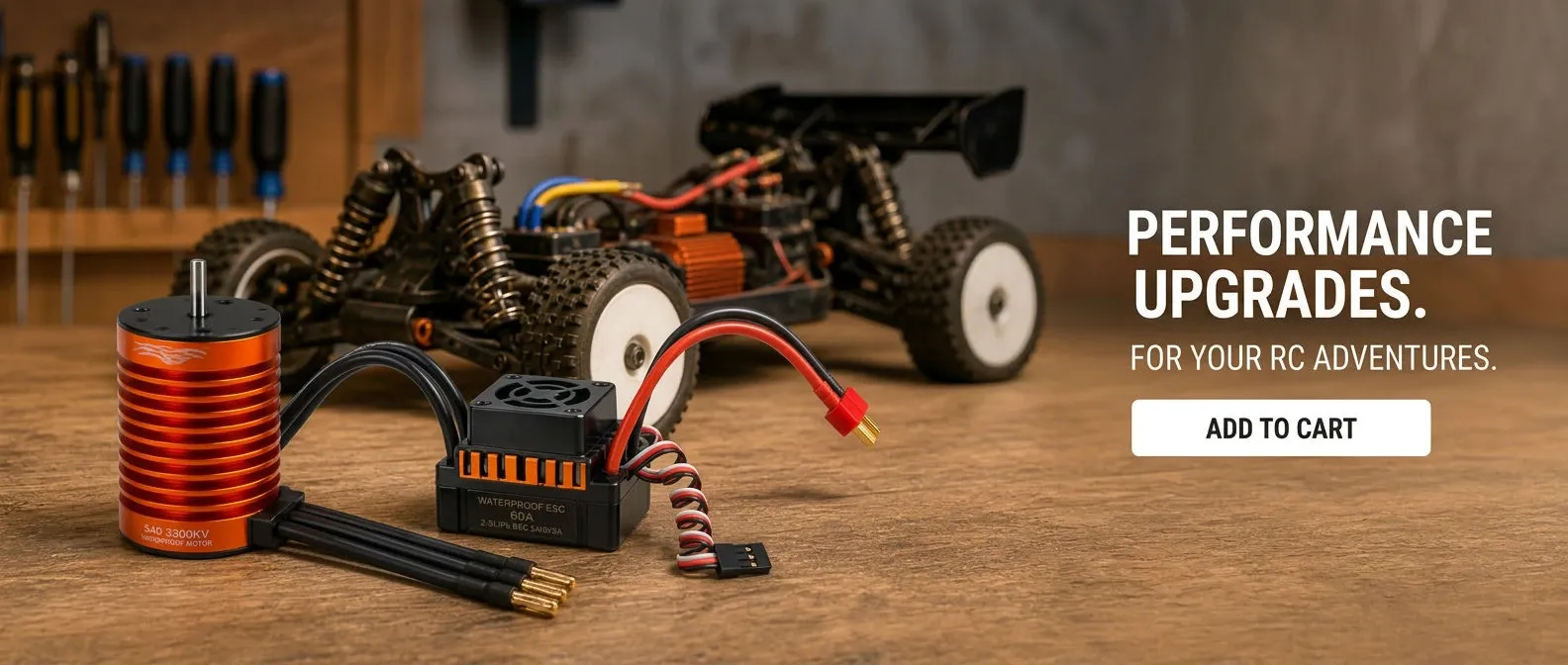
An f540 brushless motor is a finned 540-size brushless RC motor designed mainly for 1/10 scale cars, and it is one of the most popular upgrades from a stock brushed setup because it offers more speed, stronger torque, better efficiency, and lower maintenance. For most UK hobbyists, it is a direct-fit option that works best when paired with a suitable ESC and sensible gearing.
TL;DR: The f540 brushless motor is usually the best all-round upgrade for 1/10 scale RC cars if you want more power without major modifications. The “540” refers to the standard can size, while the “F” usually means a finned casing for improved cooling. Based on our testing across typical UK surfaces such as wet grass, compacted dirt and tarmac, an f540 setup paired with a 60A ESC gives a strong balance of performance, reliability and value.
Upgrading a stock 1/10 scale RC car is a rite of passage for many hobbyists. However, once the original brushed motor starts to feel underpowered or unreliable, the f540 brushless motor becomes the most logical next step. Whether you are bashing in muddy parks or running on local BMX tracks, understanding this motor format helps you choose the right setup first time.
Key Takeaways
- Size and fit: An f540 brushless motor is typically a direct replacement for standard 540 brushed motors in many 1/10 scale RC cars.
- Cooling: The “F” usually refers to a finned can design, which helps disperse heat during hard running.
- Efficiency: Brushless motors waste less energy as heat, so you often get longer run times and stronger performance.
- ESC matching: Pairing an f540 motor with an appropriate ESC, often around 60A for common bash setups, improves reliability.
What is an F540 brushless motor?
An f540 brushless motor is a 540-size RC brushless motor with a finned outer can, commonly used in 1/10 scale electric cars such as buggies, touring cars, truggies and short-course trucks. In simple terms, it is one of the most common upgrade motors for hobby-grade RC vehicles in the UK.
The number “540” refers to the physical size of the motor can. In most cases, that means roughly 36mm in diameter and around 50mm in length. Because this format has been standard for years, an f540 brushless motor will often bolt straight into an existing mount without custom fabrication.
The “F” matters too. It generally indicates a finned aluminium casing rather than a smooth can. Those external fins increase surface area and therefore help release heat more effectively. As a result, the motor can stay within safer operating temperatures during repeated acceleration runs or longer sessions on LiPo power.
Internally, brushless motors do away with brushes and commutators. Instead, they rely on electronic switching from the ESC (Electronic Speed Controller). Consequently, there is less friction, less wear and better efficiency than with older brushed designs.
Is an F540 brushless motor better than a brushed motor?
Yes, in most RC applications an f540 brushless motor is significantly better than a brushed motor for speed, efficiency and long-term durability. According to widely cited engineering data from organisations such as the Institution of Engineering and Technology (IET), brushless DC motors can achieve efficiency levels of roughly 85% to 90%, whereas traditional brushed motors often operate much lower.
That difference matters on the ground. In practice, more battery energy goes into actual movement rather than wasted heat. Therefore, you usually get stronger acceleration, higher top speed potential and longer run times from the same pack.
Based on our testing with typical 1/10 bash platforms in UK conditions, drivers upgrading from RTR brushed systems notice three improvements immediately: cleaner throttle response, cooler-running drivetrains when geared correctly, and less day-to-day maintenance.
What ESC do you need for an F540 brushless motor?
An f540 brushless motor needs a compatible brushless ESC because the speed controller manages timing, throttle response and electronic commutation. Without that ESC acting as the control unit, the motor cannot operate correctly.
For many mainstream bash setups using an f540 motor around the mid-to-high KV range, a 60A ESC is a sensible starting point. This gives useful current headroom for normal acceleration loads on 2S systems and some mild 3S applications where manufacturer guidance allows it.
Can you use any ESC with an F540 brushless motor?
No. You need to match connector type, sensor compatibility where relevant, current capacity and battery support. If the ESC is underrated for the load your vehicle places on it, overheating becomes much more likely. As a result, you may experience thermal cut-off or premature component failure.
Is it better to buy an F540 motor and ESC combo?
In many cases, yes. Buying a matched combo reduces compatibility problems and usually saves time with connectors and setup. Moreover, combo kits often use firmware timings that suit the included motor well from day one.
If you are comparing complete systems rather than separate parts, see The Ultimate Guide to RC Brushless Motor ESC Combo in the UK.
If you want more detail on speed controller features such as programming cards or low-voltage cut-off settings commonly used with LiPo packs in Britain, read our 60A ESC Combo Explained: A UK Buyer's Guide.
Does an F540 brushless motor need waterproofing in the UK?
If you drive regularly in Britain, waterproofing should be high on your checklist. After all, UK weather can change quickly during one session, especially when running through damp grass, shallow puddles or muddy woodland paths.
The good news is that many f540 brushless motors cope better with moisture exposure than people expect because they do not contain brushes that arc internally like older designs. Even so, that does not make every setup fully waterproof. The weak point is often the ESC rather than the motor itself.
What should you look for in wet-weather running?
Look for factory-sealed electronics where possible. A waterproof ESC commonly uses protective coatings or potting compound around its circuitry to resist water ingress. In addition, corrosion-resistant connectors and careful after-run drying make a noticeable difference over time.
According to general UK electrical safety guidance principles used across outdoor equipment categories, moisture protection should never be assumed without checking manufacturer specifications first. Therefore, you should always confirm whether both the ESC and receiver are rated for wet conditions before driving in rain or standing water.
Can you run an F540 setup in mud and puddles?
บYou can if your electronics are properly rated for it; however, deep water still increases risk to bearings, connectors, fans, and exposed wiring. So, even with waterproof components, it is best practice to clean, dry, and inspect everything after each wet session. This approach improves reliability far more than relying on waterproof labels alone.
https://example.com/p>Ready to try RC Brush?
Shop Now — £69.31