Rc Brushless Pinion Gear Mesh Checklist Uk
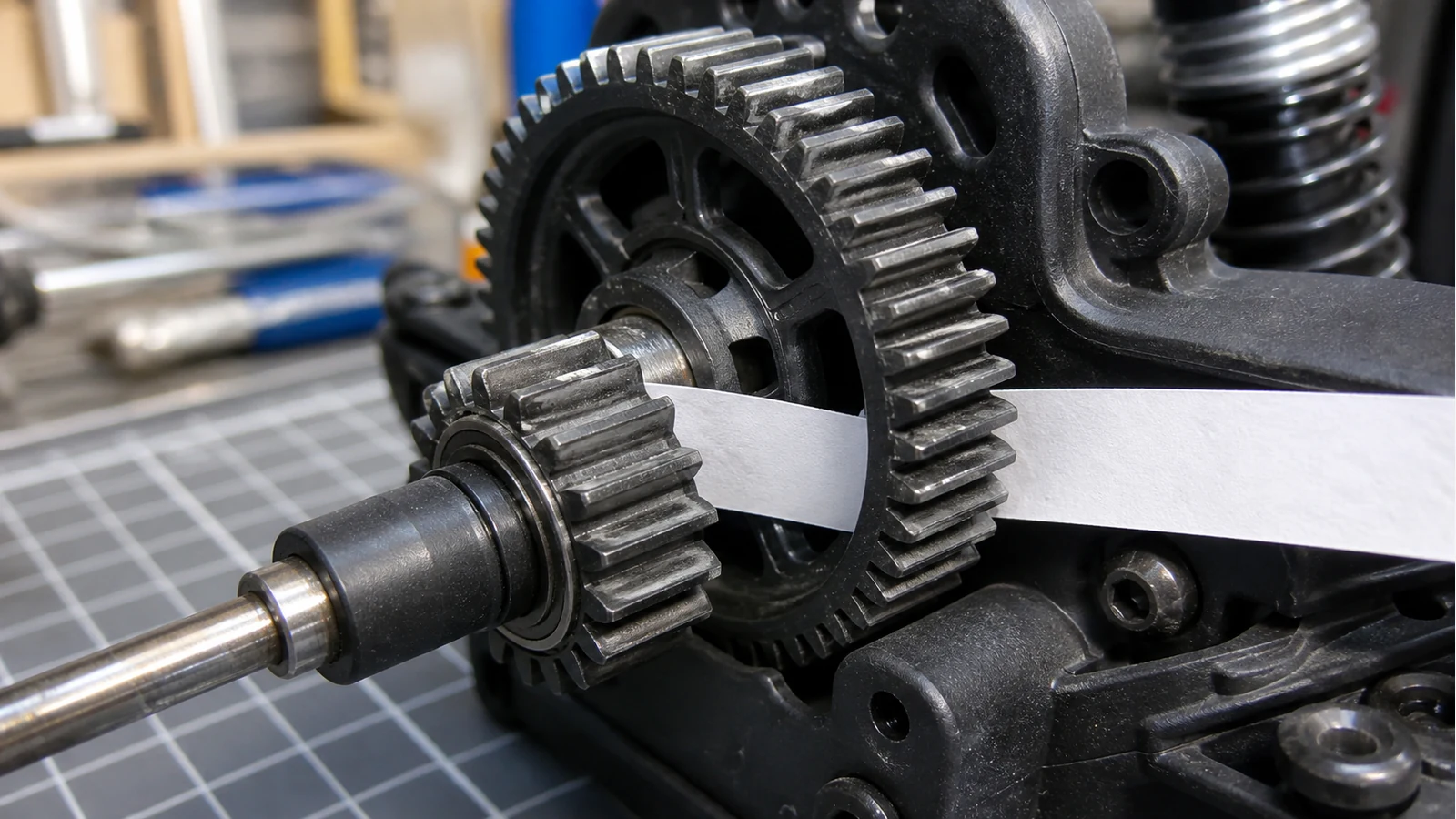
The direct answer: set pinion-to-spur mesh before you judge the new brushless system. Mesh that is too tight adds load and heat; mesh that is too loose strips teeth. UK retailer guidance such as the Wheelspin Models paper-method guide explains why a small amount of clearance matters.
Brushless power exposes weak setup faster than a stock brushed system. A car can feel quick for one pack and then start clicking, binding or running hot because the gears were never seated correctly.
Checklist before tightening the motor
- Pitch match: confirm the pinion and spur use the same pitch or module.
- Shaft size: confirm the pinion bore matches the motor shaft and the grub screw lands on the flat.
- Tooth count: start conservative if you changed motor KV or battery voltage.
- Paper method: place a narrow paper strip between pinion and spur, push gears together gently, tighten the motor, then roll the paper out.
- Free-roll test: roll the car by hand. It should feel smooth, not gritty or jammed.
- First-pack check: run briefly, stop, listen and check for unusual heat.
Too tight vs too loose
Too tight often sounds whiny and makes the car feel held back when you push it by hand. The motor and ESC may warm quickly because the drivetrain is constantly loaded. Castle Creations' general motor guidance links heat problems to gearing choices and encourages gearing down when temperatures climb; see its expert tips for motor setup.
Too loose often sounds rattly or clicking under throttle. The spur teeth may develop a hooked or shaved look. Damp-grass grit makes this worse because dirt enters the gear cover and loose mesh gives the teeth room to slap rather than roll.
When to recheck
Recheck mesh after fitting a new pinion, after a hard crash, after removing the motor, or after the first hot run following a brushless conversion. Community troubleshooting threads, including this ARRMA Forum discussion on motor and ESC temperatures, repeatedly point back to gearing and mesh as early checks when upgraded systems run hotter than expected.
Do not guess tooth counts
There is no single tooth count that is correct for every 1/10 chassis. Tyre diameter, spur size, vehicle weight, battery voltage and driving surface all change the load. If you changed several parts at once, start smaller and work up only after the car runs cool and smooth.
Useful next reading
If you are still planning the electronics rather than fixing a gear problem, start with the brushed to brushless conversion checklist and the 3300KV vs 4370KV guide.