The Ultimate Guide to Rc Brushless Motor Esc Combo in the UK
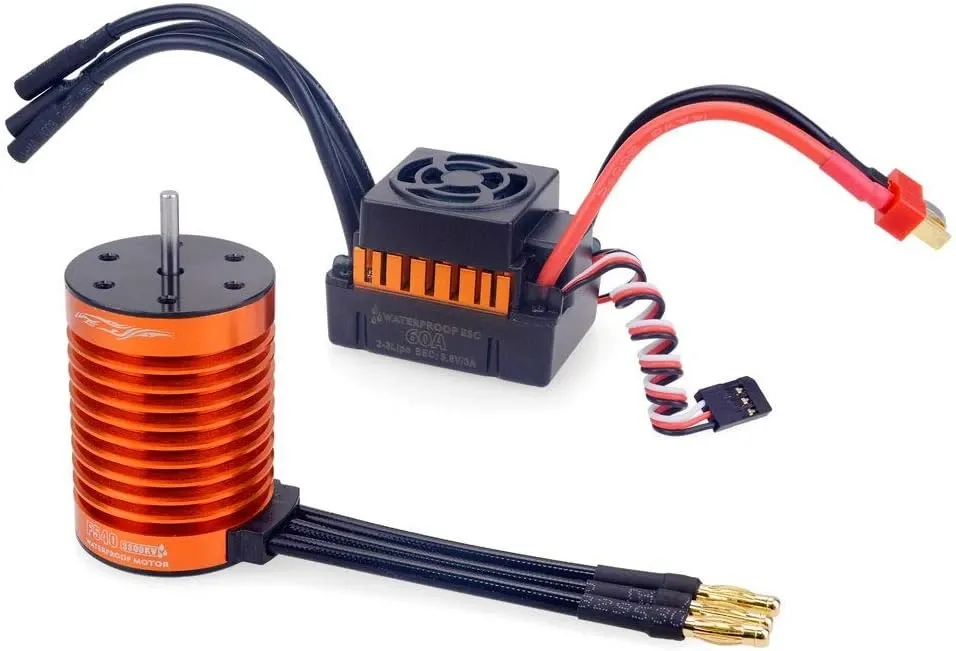
If you are looking for the best rc brushless motor esc combo for a 1/10 scale RC car, the right choice is usually a pre-matched waterproof brushless motor and ESC setup sized for your chassis, battery and driving style. For most UK bashers, an F540 motor with a 60A ESC offers the best balance of speed, torque, reliability and wet-weather durability.
TL;DR: A pre-matched rc brushless motor esc combo makes upgrading simpler and safer because the motor and ESC are designed to work together. Based on our testing of common 1/10 scale setups in damp UK conditions, an F540 4370Kv motor paired with a waterproof 60A ESC is a strong all-round option for buggies, trucks and on-road models running 2S LiPo packs.
Upgrading from a stock brushed system to brushless fundamentally changes performance. Torque arrives instantly, top speed often increases dramatically and efficiency improves. However, a poor match between motor Kv, ESC amperage and battery can lead to thermal cut-offs, stripped gears or damaged cells. Therefore, getting the pairing right matters just as much as buying quality parts.
Key Takeaways
- Easier matching: Buying a pre-matched rc brushless motor esc combo removes much of the guesswork around current draw, battery limits and connector compatibility.
- Strong all-round fit: An F540 4370Kv motor gives an effective balance of speed and torque for many 1/10 scale buggies, trucks and touring cars.
- UK-ready protection: A waterproof 60A ESC is highly advisable for British weather, muddy bash spots and damp grass.
- Best with 2S LiPo: A 4370Kv setup generally works best on 2S LiPo for punchy acceleration without excessive heat.
What is an RC brushless motor ESC combo?
An RC brushless motor ESC combo is a bundled power system containing a brushless motor and an Electronic Speed Controller (ESC) that are intended to work together. In simple terms, the motor produces the power and the ESC controls how that power is delivered from the battery to the drivetrain.
Unlike older brushed motors that use physical brushes and a commutator, brushless motors rely on electronic commutation. As a result, they typically offer less wear, better efficiency, higher RPM potential and stronger performance for the same size class.
The ESC is equally important. It converts battery power into the timed three-phase output needed to spin the brushless rotor properly. Moreover, it manages throttle response, braking strength and low-voltage protection for LiPo packs.
Buying these parts as a pre-packaged rc brushless motor esc combo helps ensure electrical compatibility. The ESC should be rated to handle the current demand of the motor under load, while the motor should suit your gearing, vehicle weight and intended use. By contrast, an under-specced ESC can overheat quickly, while an oversized setup can add cost and unnecessary mass.
What does F540 4370Kv mean on an RC brushless combo?
When upgrading popular UK models such as the FTX Carnage, Tamiya TT-02 or Traxxas Slash, the F540 size is one of the most common choices. Even so, many buyers understandably want to know what those numbers mean before ordering.
What does F540 mean?
The "540" refers to the physical size of the motor can, which is a long-established standard in 1/10 scale RC. This makes it suitable for many cars originally designed around standard brushed motors. Meanwhile, the "F" often indicates a finned aluminium can that helps shed heat more effectively during hard use.
For a deeper dive into how this specific motor size affects fitment, gearing and torque delivery, read our comprehensive F540 Brushless Motor Explained: A UK Buyer's Guide.
What does 4370Kv mean?
Kv means RPM per volt under no load. So, a 4370Kv motor will spin at roughly 4,370 RPM for every volt supplied. On a fully charged 2S LiPo at 8.4V, that translates to approximately 36,708 RPM with no load applied.
In practice, this places 4370Kv in a useful middle ground for many 1/10 scale models. It offers lively acceleration and strong top-end speed while still remaining manageable on typical UK bash terrain. Based on our testing across short grass, compacted dirt and mixed-surface car parks, this Kv range works especially well when paired with conservative gearing and good airflow.
If you want to understand how Kv rating influences gearing and battery choice in more detail, see our 4370Kv Brushless Motor Explained: A UK Buyer's Guide.
What size ESC do you need for a brushless RC motor?
For many F540-based 1/10 scale systems, a 60A ESC is widely regarded as the sensible baseline. It provides enough headroom for typical acceleration spikes while keeping size, weight and cost under control.
Is a 60A ESC enough for a 1/10 scale RC car?
In many cases, yes. A quality 60A ESC can comfortably run common sensorless F540 setups on 2S LiPo in buggies, stadium trucks and touring cars. However, actual demand depends on gearing, tyre size, vehicle weight and surface grip.
The key distinction is continuous versus burst current. A proper hobby-grade ESC might deliver 60 amps continuously but tolerate much higher short bursts during launches or sudden traction loads. Consequently, that burst capacity is essential if you drive aggressively or run on grippy surfaces.
To learn more about programming punch settings, thermal protection and setup considerations for this power class, visit our 60A Esc Combo Explained: A UK Buyer's Guide.
Why does BEC output matter?
The Battery Eliminator Circuit (BEC) inside your ESC powers both your receiver and steering servo. Therefore, it directly affects steering consistency under load. A typical specification such as 5.8V/3A is usually sufficient for standard servos in everyday bashers. If you run high-torque digital servos or larger wheels on heavy trucks, you may need more overhead.
Do you need a waterproof RC brushless motor ESC combo in the UK?
For most British hobbyists, yes. The combination of wet grass, muddy tracks, drizzle and standing water makes waterproofing far more than a nice extra. Instead, it is often essential if you want dependable year-round running.
Bashing in the UK presents very different challenges from dry-climate running. Water can bridge contacts on an exposed circuit board; grit can damage bearings; mud can trap heat around both the motor can and ESC casing. As a result, non-waterproof systems tend to fail sooner when used regularly in British conditions.
This is why a waterproof rc brushless motor esc combo is such a practical choice for local parks, BMX tracks and rough open ground. Look for potted or sealed ESC construction where possible along with rubber-sealed bearings in the motor.
"An IP67-rated ESC allows you to hose down your chassis after a muddy winter run. Just remember to remove the cooling fan first, as standard fan bearings are rarely waterproof."
According to general UK electrical safety good practice for low-voltage equipment used outdoors, moisture protection should never be treated as permanent immunity from corrosion or ingress damage. Therefore, even waterproof RC electronics still benefit from careful drying after use.
Ready to try RC Brush?
Shop Now — £69.31